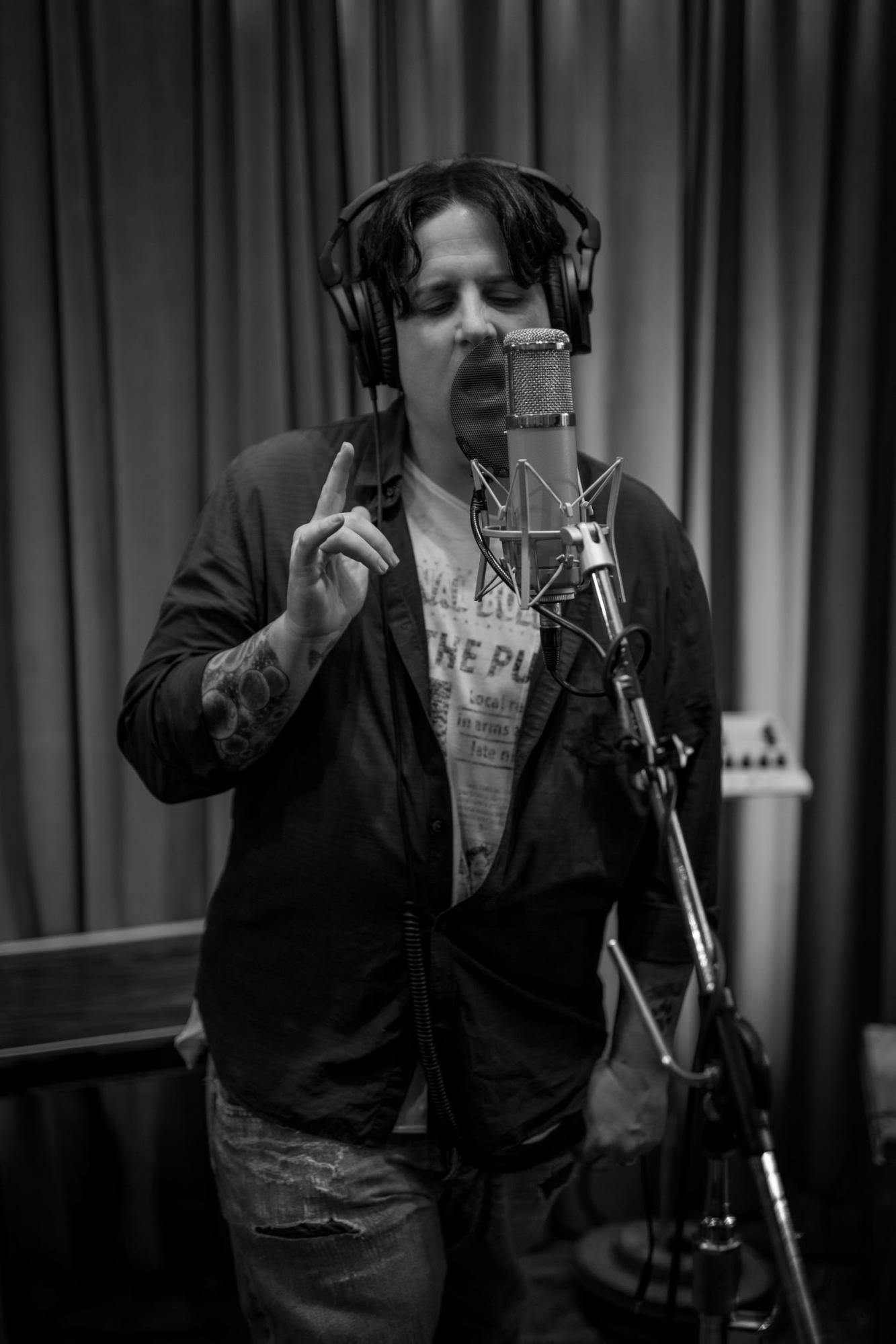
Los Angeles singer-songwriter Rourke celebrates his most visceral and ambitious work to date — “I Can’t Breathe.” The single arrives not as a response to a moment but as a reckoning with one. Clocking in at over five minutes, the track is a through-composed emotional journey — no repeated sections, no chorus to return to for comfort. It doesn’t let you settle. That’s the point. It moves deliberately through a range of emotions before landing, defiantly, in hope.
“I wanted each section to reflect the lived experience of many Black Americans in this country, who go through fear, anger, sadness, frustration, and hope — and that’s what the outro is all about, hope,” said Rourke. “I pulled inspiration from Paul McCartney’s ‘Blackbird,’ altering the lyrics to ‘Someday the blackbird will rise.’”
The song draws its name, in part, from the final words of George Floyd, but Rourke is careful to locate its true origin elsewhere — in the racist counter-protests that erupted in response to the global uprising that followed Floyd’s assassination. The opposing chants, the all-lives-matter pushback, the upheaval that met a movement for basic dignity: that’s what ignited this record.
“It wasn’t exactly inspired by George Floyd, although parts of the song are obviously in his voice,” said Rourke. “It’s a direct response to the racist counter-protest and all the moments before that…because George Floyd was not the first.”
From the first notes, the production feels deliberate, layered, and cinematic rather than punishing, giving each section room to breathe and land. Where many protest songs lean on volume, “I Can’t Breathe” leans on architecture. It builds its case the way a great film does: through accumulation, not explosion.
“I decided to make a through composition, so instead of the usual verse-chorus structure [ABABA], for this song, you only hear each section once; they don’t repeat, so each section carries its own weight,” said Rourke.
The recording process itself was a study in modern collaboration. Rourke worked with an LA-based producer throughout, but “I Can’t Breathe” was specifically built across time zones and coastlines, with each contributor adding their piece from wherever they were in the world. Foo Fighters keyboardist Rami Jaffee, whom Rourke has known since junior high, tracked his parts from Palm Springs. Guns N’ Roses guitarist Richard Fortus, who plays on two other songs, sent his contributions in from St. Louis. It was only Rourke’s vocals and guitar that were captured in the L.A. studio, with a bass player and drummer rounding out the full sound remotely.
“Everything was recorded piecemeal,” Rourke noted. “It added to the color and texture of the songs.”
A lyric video for the track is in post-production, and it may be the most potent companion piece Rourke could have created. The visual throughline traces racial protest from the present day back through the centuries that made it inevitable, making explicit what the music already implies: this isn’t a song about one moment. It’s a song about a very long one.
“It’s 400 years of incidents. So, we edited in visuals to show context — the racist protestors, the ‘I Can’t Breathe’ movement, and so much more,” added Rourke.
Rourke came to music circuitously. A film school graduate who always fancied himself, in his own words, as “the edgy lovechild of Scorsese’s Travis Bickle and Coppola’s Motorcycle Boy,” he began writing songs a decade ago in response to the rising political discord of 2016. He hired songwriting coaches, wrote consistently, and eventually one song grew to 20, then 50, then 100 — until he was able to walk into a studio in Los Angeles to record what began as a four-part project and bloomed into a full ten-song album.
That album, Starstruck, is the home of “I Can’t Breathe” — and it’s a record that refuses genre comfort. Rourke describes his overall sound as “‘70s Springsteen meets ’80s Guns N’ Roses,” but deliberately avoided sonic uniformity across this record. There’s hard rock, acoustic blues, even a pop piano piece called “Our Love is Gone Away” that sounds, on the surface, like a breakup song — until you realize it’s about the erosion of core Christian values in modern America. The album’s first single, “Rise,” was directly inspired by Michelle Obama’s “When they go low, we go high.” It’s an anti-bullying rock anthem that people have compared to Bon Jovi.
“Like my heroes McCartney, Lennon, Strummer, and Springsteen — I’ve got a lot to say,” added Rourke.
Live performances are currently on hold, but the music is doing its own work. In the meantime,
Starstruck is set for release this spring, with “I Can’t Breathe” already available now. The full album drops in late May across all streaming platforms. Be sure to follow Rourke on TikTok, Instagram, Facebook, and Twitter — and if his music moves you, share it. With Foo Fighters and Guns N’ Roses alumni in his corner and a decade of conviction driving every track, Rourke has built something worth spreading.
“I Can’t Breathe” is available now on all streaming platforms with promotional support from Starlight PR.
Linktree | Apple Music | Spotify | YouTube | Instagram | Twitter | TikTok | Facebook
 hoodcriticmagazine.com