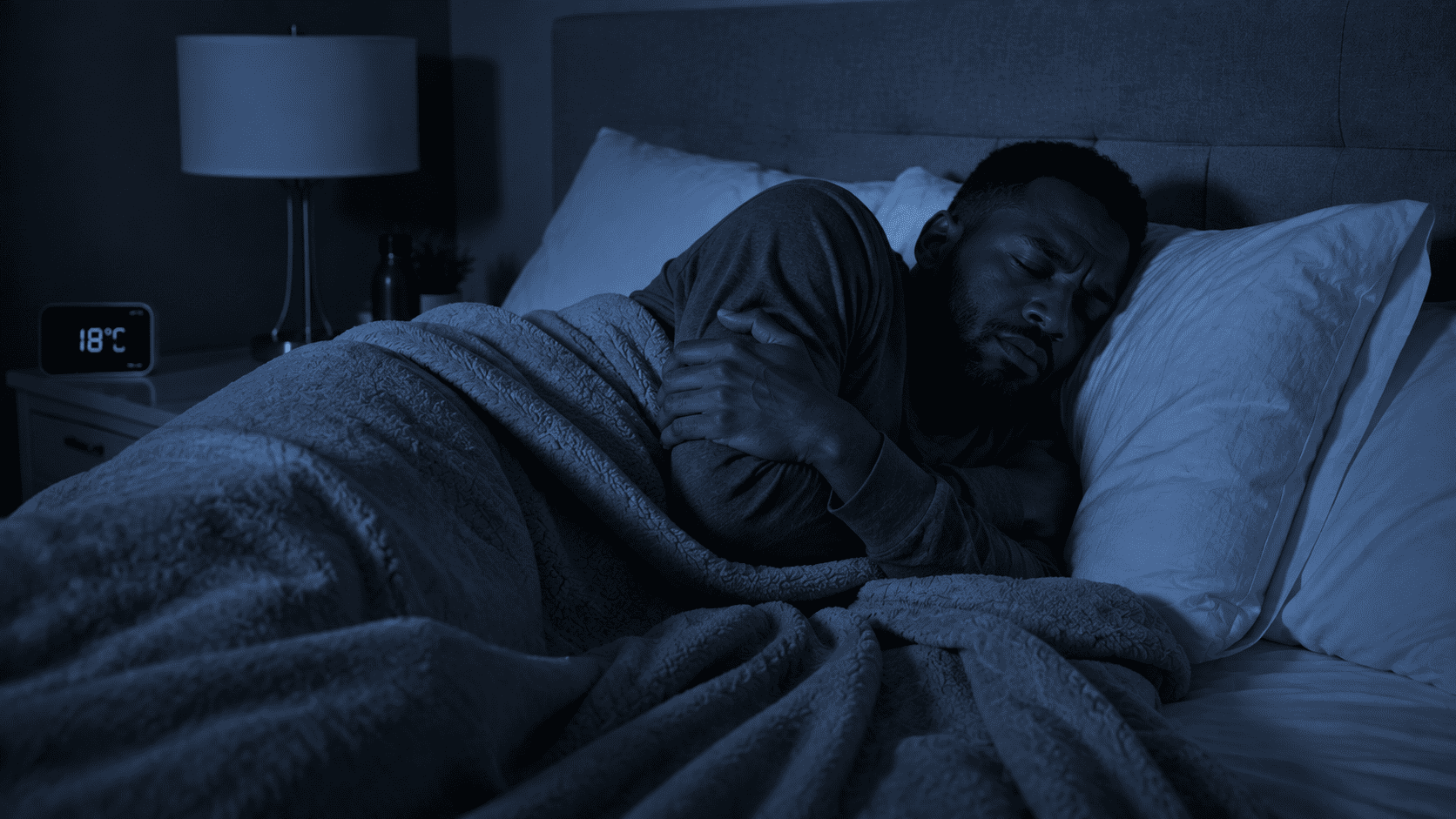
Your body temperature drops when you sleep, and that’s not a coincidence. It’s one of the most important biological processes your body runs every single night. Most people never think about it. They crawl into bed, close their eyes, and either sleep well or don’t. But the quality of that sleep connects directly to how well your body manages its core temperature in the hours around bedtime. Understanding why this happens and what supports it can change how you approach your sleep setup entirely.
The Science Behind Your Nightly Temperature Drop
Your body follows a 24-hour internal clock called the circadian rhythm. This clock controls everything from hormone release to alertness levels. Temperature regulation is one of its most consistent functions.
In the early evening, your core body temperature begins to fall. This drop is not random. It’s a deliberate signal from your circadian system that sleep is approaching. According to a peer-reviewed study published in PMC, core body temperature decline coincides directly with the transition into non-REM sleep stages. The drop helps slow metabolic activity and prepare the brain for deep, restorative rest.
How Your Body Releases Heat
The body doesn’t just passively cool down. It actively pushes heat out through a process called vasodilation. Blood vessels near the surface of the skin, particularly in the hands and feet, widen to allow more blood flow to the skin surface. That blood carries heat from the core to the extremities, where it can escape into the surrounding air.
This is why your hands and feet often feel warm right before you fall asleep, even when the rest of you feels comfortable. Your body is using them as heat vents. Healthline confirms that this vasodilation in the hands and feet is the primary mechanism your circadian clock uses to shed core heat before and during sleep.
How Far Your Temperature Actually Falls
The drop isn’t dramatic, but it’s consistent. Core body temperature falls by roughly 1°F to 2°F during sleep, reaching its lowest point in the early morning hours before gradually rising again as wake time approaches. That rise in temperature is part of what signals the body to prepare for wakefulness.
The timing matters. If your environment disrupts that temperature drop at the wrong moment, it pulls you out of deep sleep or prevents you from reaching it in the first place.
Why This Process Affects Sleep Quality
The connection between body temperature and sleep quality runs deep. Research from the Sleep Foundation shows that the body’s heat-shedding process before sleep onset directly affects how quickly you fall asleep and how much time you spend in slow-wave sleep.
Slow-wave sleep is the deepest stage of non-REM sleep. It’s the stage tied to physical recovery, immune function, and memory consolidation. When your body can’t drop its core temperature efficiently, it struggles to enter and stay in this stage. The result is lighter, more fragmented sleep even if you spend a full eight hours in bed.
Environmental heat makes this worse. A bedroom that’s too warm, or bedding that traps heat against your skin, creates a thermal barrier between your body and the cooler air it needs to offload heat into. Your body keeps trying to cool down. You keep half-waking up. By morning, you feel like you barely slept.
What Disrupts the Temperature Drop
Several factors work against the body’s natural cooling process. Some are environmental and some are fabric-related.
- Room temperature is the most obvious factor. Sleep experts consistently recommend a bedroom temperature between 65°F and 68°F (18°C to 20°C) for most adults. Rooms warmer than this give the body less of a thermal gradient to shed heat into, which slows the cooling process and delays sleep onset.
- Humidity compounds the problem. High humidity reduces the rate of sweat evaporation, which is a secondary cooling mechanism the body uses during sleep. A humid room combined with heat-trapping bedding creates conditions where the body’s thermoregulation system struggles throughout the night.
- Fabric choice matters more than most people realize. Dense synthetic materials trap heat close to the skin instead of allowing it to escape. This creates a warm microclimate under the covers that directly competes with the body’s effort to cool down. Breathable natural fibers allow the heat your body is trying to shed to actually move away from the skin surface.
How Your Bedding Supports or Fights Thermoregulation
Your sheets are in direct contact with your skin all night. That makes them one of the most influential variables in your sleep temperature environment.
Cooling sheets made from breathable 100% cotton allow airflow across the skin surface. This supports the body’s vasodilation process by giving the heat being pushed to the skin surface somewhere to go. Dense or synthetic sheets block that process and force the body to work harder to maintain the right core temperature.
Silver-treated fabric adds another layer of benefit. Sweat accumulation on sheets creates bacterial growth that generates additional odor and buildup over time. Silver treatment reduces up to 99.7% of odor-causing bacteria, keeping the sleep surface fresher between washes. Sheets that stay fresh up to 3x longer than untreated fabric mean the sleep environment stays cleaner even on warm nights when your body is working hardest to regulate its temperature.
The pillow matters too. Your head and neck are major heat release points during sleep. A pillow that traps heat around your face and neck interferes directly with the body’s core cooling process. Breathable fill with good airflow keeps that release point clear throughout the night.
Practical Steps to Support Your Body’s Cooling Process
Supporting your body’s natural temperature drop doesn’t require complicated changes. A few consistent adjustments make a real difference.
Here’s what to focus on:
- Set your bedroom temperature between 65°F and 68°F before bed
- Use a fan or air circulation to maintain airflow across the sleep surface
- Choose breathable cotton sheets rather than synthetic alternatives
- Keep humidity below 50% using a dehumidifier in humid climates
- Avoid heavy exercise within two hours of bedtime since it raises core temperature
- Take a warm shower 60 to 90 minutes before bed to trigger the post-shower temperature drop
The warm shower tip works because it raises skin temperature briefly, which then falls quickly after you step out. That drop mimics and reinforces the body’s own pre-sleep cooling signal. After using fresh towels to dry off, your skin temperature continues to fall, which helps the body move into sleep mode faster.
Why Getting This Right Changes Everything
Most people troubleshoot poor sleep by looking at their phone habits or caffeine intake. Those things matter, but the thermal environment is just as important and far less talked about. Your body runs a precise thermoregulation process every night. When the environment supports it, sleep is deeper and more restorative. When it fights it, you wake up more often and spend less time in the stages that actually restore you.
The right bedding, the right room temperature, and a few smart habits before bed all work together to give your body’s cooling system what it needs. That’s the foundation of consistently good sleep.
Miracle made products are built with this in mind. Breathable fabrics, silver treatment for lasting freshness, and materials that work with your body’s natural processes instead of against them.
Disclaimer: Antimicrobial finish helps protect the fabric from odor-causing bacteria. Does not protect users against bacteria or other disease organisms.

